
The Egg Metaphor That Stayed Untranslated on X
When a "Help us China" plea went viral on X, the most profound response was an untranslated egg metaphor. Read on why "cognitive friction" is the key to deep learning, what motivated me to learn English & why true literacy means refusing to let the world be translated for you.

Why some meaning works best without mediation
Two weeks ago on X, a short exchange went viral.
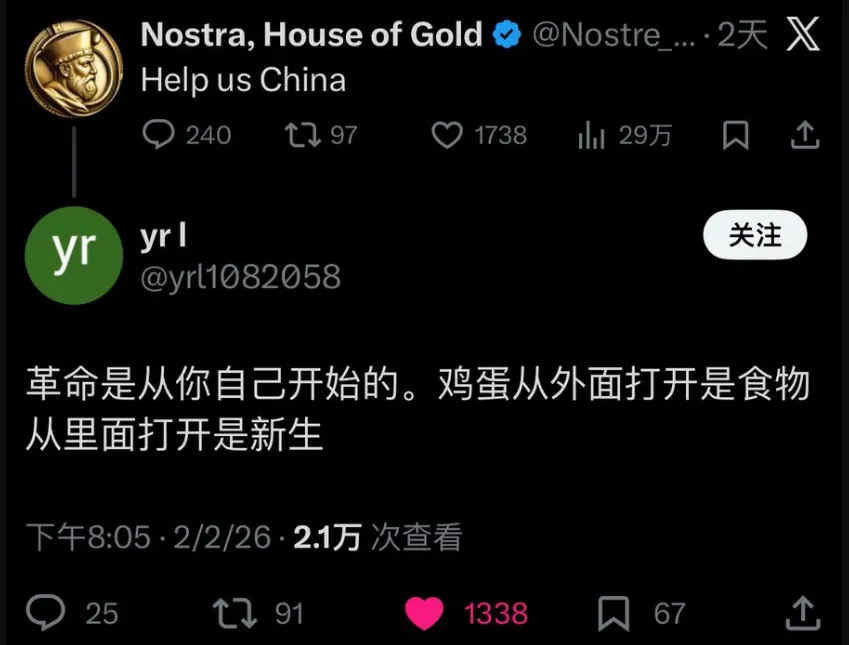
An American macro strategist account, House of Gold, reacted to the price of gold suddenly "flash-crashed" to $4,660—driven by Western speculative selling and a "hawkish" turn at the Fed. Facing a familiar sense of institutional exhaustion, they posted just three words:
“Help us China.”
Directly underneath, another account, YR, replied — entirely in Chinese, without translation:
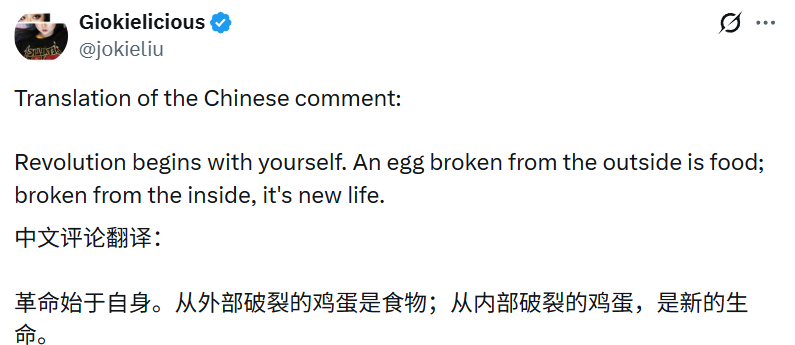
“革命命始于自身。 从外部打破的鸡蛋是食物, 从内部打破的鸡蛋,是生命。”
At the time captured in screenshots, that Chinese reply had reached roughly 21,000 views.
Shortly afterward, the same lines were translated into English and reposted by giokielicious (@jokieliu). That translated version spread much further, drawing roughly 70,000 likes and a million views. and circulating widely across X.
The metaphor itself wasn’t controversial. Most people would agree with it immediately if it were written in English.
But that wasn’t what stopped people from scrolling.
What made the moment work was something else entirely: the original sentence stayed untranslated.
Not new wisdom , but cognitive friction
It’s important to be clear about one thing.
There is nothing uniquely “Chinese” about this idea.
The same insight appears throughout Western civilization:
- Socrates told us that
"the unexamined life is not worth living."
- Jesus called people to repent — to turn inward, to change oneself rather than blame the world, proclaiming that
"the kingdom of heaven is near"
Self-reflection is not Eastern wisdom versus Western wisdom. It is shared human wisdom.
That’s why the egg metaphor itself isn’t what made this moment powerful. The content was familiar. The insight was old.
What created the arrest in attention was cognitive friction.
Why the friction mattered
If the same idea had been written in English, even by a Chinese speaker, it would have disappeared instantly.
People would nod. Agree. Move on.
The original Chinese reply didn’t explain itself. It didn’t adapt to English. It didn’t meet the reader halfway.
It simply remained where it was.
And suddenly, readers faced a choice:
- rely on someone else’s translation
- or confront the fact that they couldn’t read it
That pause — brief but real — is rare.
Not shock. Not offense. Just epistemic friction.
The question beneath the meme
Underneath the joke and the reposts was a quieter question:
Do you want everything interpreted for you — or do you want to encounter meaning directly?
Most of us live inside translations:
- translated headlines
- translated outrage
- translated explanations of other cultures
We feel informed, but we are always one step removed.
That untranslated Chinese reply didn’t argue or instruct. It simply implied:
If you want meaning, come meet it.
Why this resonated with me
This moment mirrors exactly why I learned English.
Not because one civilization has more wisdom than another — they don’t. East and West have always offered the same human nutrition: reflection, responsibility, love, courage, meaning.
I learned another language out of curiosity — to understand how other people think, how another civilization sees the world — and because I didn’t want anyone, whether government, media, or narrator, to decide what that civilization was for me.
I wanted to encounter it directly.
That encounter unfolded across stages of life.
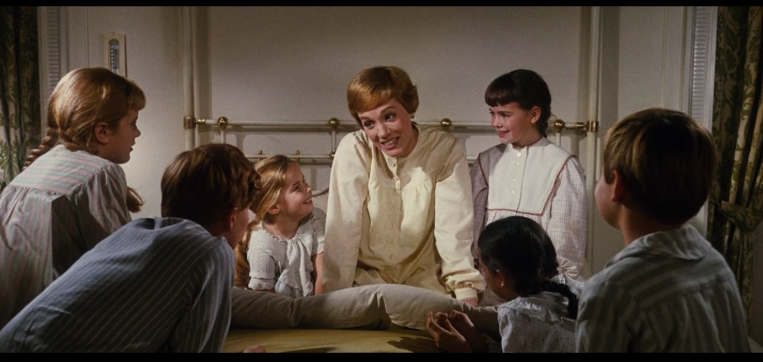
In middle school, it began with The Sound of Music.
Raindrops on roses, whiskers on kittens.
Simple, almost childlike words. When they met the rhythm, something clicked. For the first time, I didn’t just understand English — I felt it. Joy settled into the language. Courage shimmered underneath it.
Later, far from home, John Denver arrived. Simple words again — mountains, rivers, coming home — carrying enormous gentleness. Another culture, holding the same emotion of longing home.
And then poetry:
How do I love thee? Let me count the ways…
As a mother, the meaning was immediate.
No one framed these moments for me. They met me where I was — because I could meet them directly. Reciting
I shall love thee better after death
to my children at bedtime has become my own form of prayer—a quiet acknowledgment that I am an imperfect vessel. It is my way of admitting I didn’t always know how to love them perfectly today, but through the poem, I am finding the path to love them better tomorrow.
Literacy as direct encounter
That’s why this viral moment matters more than it seems.
The egg metaphor wasn’t powerful because it was new. It was powerful because it wasn’t mediated.
Language literacy isn’t just about communication. It’s about not outsourcing your understanding of the world.
Sometimes, the most honest thing an idea can do is stay untranslated — and wait.
Agency is the refusal to outsource your understanding of the world.
At MetaChinese, we help you build that agency through:
Instead of rote memorization, we use Structural Literacy to help you decode the logic of the language. This isn't just about learning words; it’s about a 100-day high-intensity sprint designed to help you reach your self-defined goals by mastering the patterns that traditional methods ignore.
Skip the "Sisyphus trap" of repetition and claim your intellectual freedom.
Your streak begins the moment you choose “signal” over “noise”.